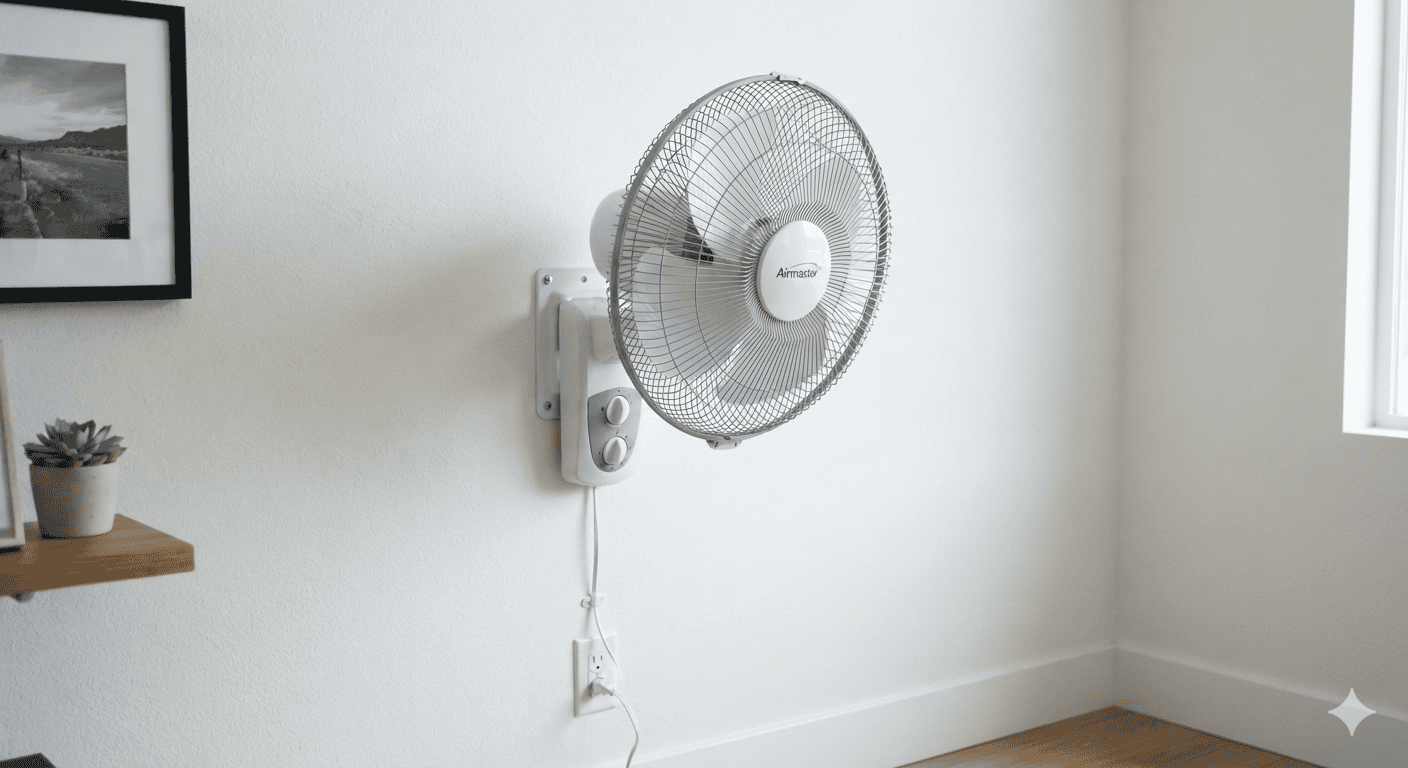
Table of Contents
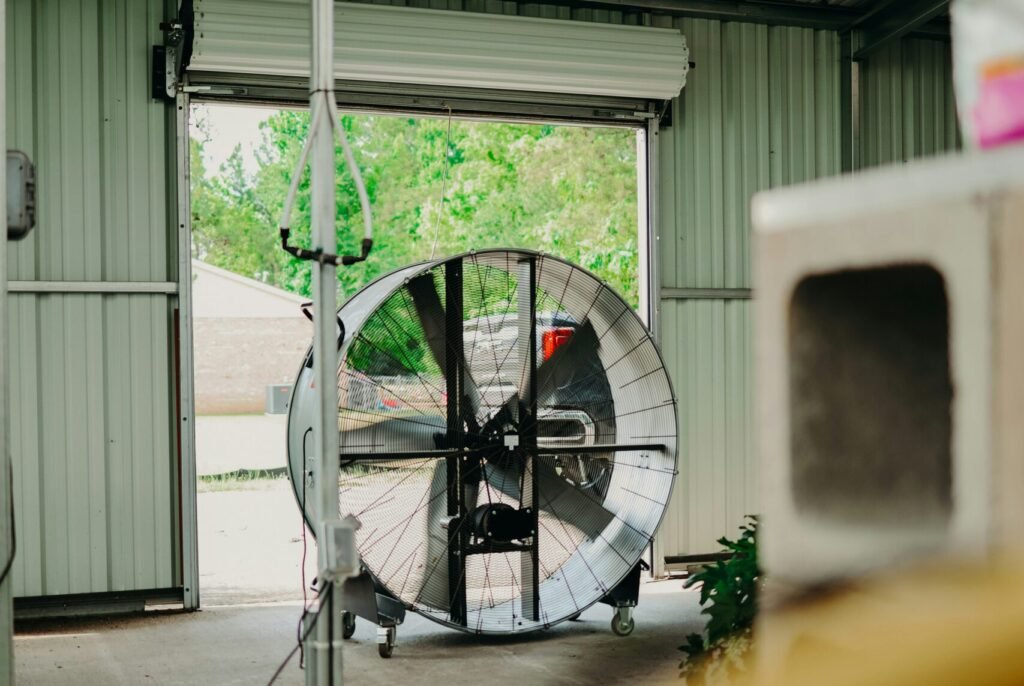
1. What an industrial fan actually is
An industrial fan is not just a larger version of a household fan. It is a heavy-duty machine designed to move large volumes of air continuously in factories, warehouses, or plants.
While a household fan simply makes a room comfortable, an industrial fan performs more demanding tasks: dissipating heat, controlling dust and fumes, keeping machinery cool, and supplying air for operational processes.
Built from robust metal, it is designed for durability and can push air even against resistance from ducts or filters. That is why it is also referred to as an industrial blower, exhaust fan, axial fan, or centrifugal fan.
A quick comparison:
Home fan = small space, light-duty operation.
Industrial fan = large space, harsh environment, continuous heavy-duty use.
An industrial fan is the “breath” of a factory—without it, heat, dust, and stale air would remain trapped inside.
If you want to know about all types of fans, you can check out our [The Ultimate Guide to Fans]
2. Why factories need them
Factories run on proper airflow, not just machines. Industrial fans are essential because, without them, heat, dust, odors, and fumes remain trapped inside.
1. Worker comfort and safety
- Installing air conditioning throughout a large factory is expensive. Fans circulate air, reducing the sensation of heat and making work easier. In areas involving welding, painting, or chemicals, exhausting fumes is also crucial for health.
2. Protecting machinery
- Motors, ovens, compressors, and production lines can overheat. Proper airflow extends equipment lifespan and reduces breakdowns.
3. Air quality
- Dust, smoke, moisture, and odors can damage products. This issue is particularly critical in food, pharmaceutical, wood, cement, and metal processing plants.
4. Supporting the process
- In some factories, fans serve purposes beyond mere cooling. They may dry products, supply air to furnaces, operate dust collectors, or force air into boilers—effectively becoming an integral part of the production line.
5. Energy and cost efficiency
- A correctly sized industrial fan—such as an HVLS (High-Volume, Low-Speed) unit or an efficient exhaust fan—outperforms multiple smaller fans. They cover large areas while consuming less electricity.
Brief examples:
Warehouse: Large ceiling fans circulate air across the entire floor.
Welding shop: Exhaust fans remove fumes.
Cement/steel plant: Dust and heat control.
Food factory: Moisture and odor control.
Power plant: Air supply for boilers and furnaces.
Factories require industrial fans because they do more than just circulate air; they ensure operations, personnel, and machinery remain safe and efficient.

3. The two main families: axial vs centrifugal
Industrial fans generally fall into two categories: axial and centrifugal. Both move air, but they do so differently. Understanding this distinction is crucial for choosing the right fan.
What is an axial fan?
In an axial fan, air moves in a straight line, parallel to the shaft. Think of an airplane propeller or a household pedestal fan—air enters from the front and exits straight out the back.
Its strength lies in moving large volumes of air at low pressure. It works excellently in open spaces but struggles if there are long ducts, filters, or significant obstructions in the path.
Best uses:
General ventilation for warehouses and factories
Wall or roof exhaust
Cooling towers
Large HVLS ceiling fans
Open-area cooling
What is a centrifugal fan?
Centrifugal fans are often referred to as blowers. Air enters through the center, an impeller spins it, and the air exits at roughly a 90-degree angle.
Their strength is pressure. It can push air through ducts, filters, dust collectors, and restrictive systems. While the air volume isn’t always as high as that of axial fans, the force is greater.
Best uses:
HVAC ducts
Dust collection
Fume extraction
Boilers and furnace
Systems handling dirty or heavy air
Simple comparison
Feature
Axial Fan
Centrifugal Fan
Airflow path
Straight, along the shaft
Enters center, exits side
Airflow
High volume
Medium volume, focused
Pressure
Low
High
Best location
Open spaces
Ducts, filters, resistance
Example
Wall exhaust, HVLS fan
Dust collector, blower
One-line takeaway
Open space + high air volume = axial fan.
- Obstructions + ducts/filters/dust = centrifugal fan.
- If a factory simply needs to ventilate a large hall, an axial fan might suffice. If air needs to be pushed through pipes, filters, or dust-laden systems, a centrifugal fan is the better choice.
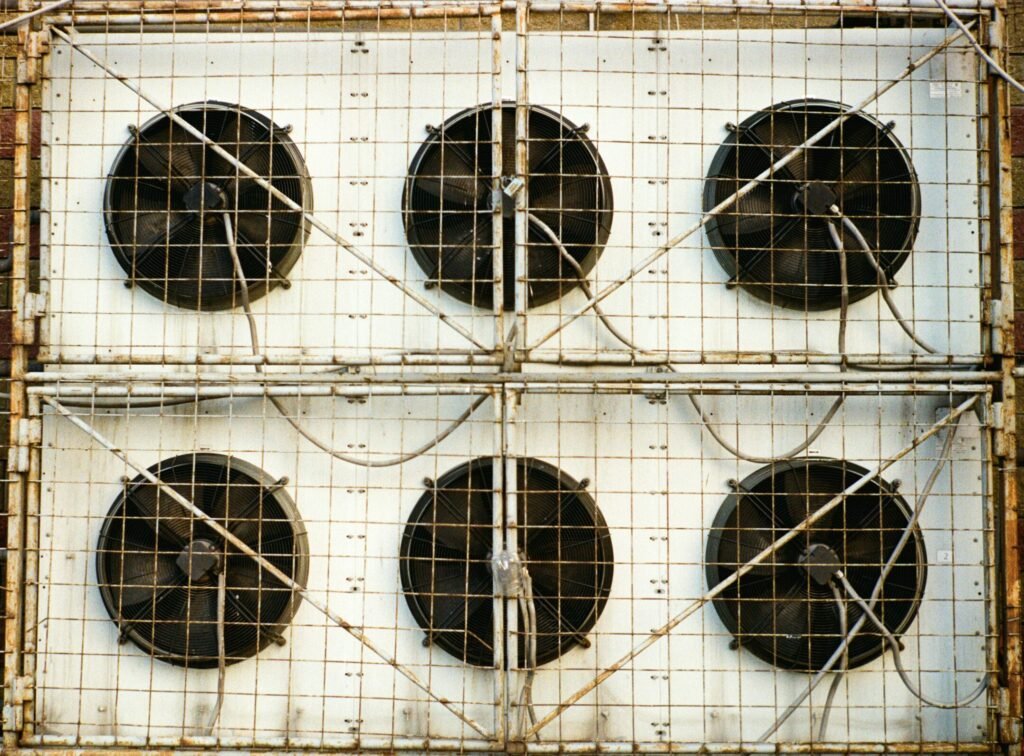
4. Important subtypes
Industrial fans generally fall into two categories: axial and centrifugal. Both move air, but they do so differently. Understanding this distinction is crucial for choosing the right fan.
Common subtypes of axial fans
Propeller/panel/wall fan
The simplest axial type. It is mounted on a wall or in an opening. Used for general exhaust, fresh air intake, or workshop cooling.
Tube-axial fan
This fan is housed inside a tube or duct. It provides better airflow direction and pressure, making it suitable for ducted ventilation systems.
Vane-axial fan
Features additional guide vanes. Both pressure and efficiency are improved. It is a better option when axial airflow is required, but there is higher resistance to overcome.
HVLS ceiling fan
High Volume, Low Speed. A large ceiling fan (ranging from 8 to 24 feet) that rotates slowly but can cover an entire warehouse. Known for comfort and energy efficiency.
Common subtypes of centrifugal fans
The main difference among centrifugal fans lies in the blade shape.
Forward-curved
Compact and suitable for clean-air applications. It does not generate very high pressure. Often found in lighter HVAC applications.
Backward-inclined / backward-curved
More efficient and stable. A common choice for ducted systems, filters, and standard industrial HVAC applications.
Airfoil
The blade shape resembles an airplane wing. It delivers quiet, energy-efficient performance when handling clean air.
Radial blade
One of the most rugged types. Designed to handle air containing dust, chips, or sticky/abrasive materials. Efficiency may be lower, but durability is high. may be lower, but durability is high.

5. How a fan is specified
When shopping for an industrial fan, people often focus on size or appearance first. However, industrial fans aren’t chosen that way; the right fan is selected based on specific technical figures. These figures indicate how the fan will actually perform in the plant.
Key terms:
CFM or m³/h
- This refers to airflow—the volume of air moved per minute or hour. CFM stands for Cubic Feet per Minute. The larger the hall or process, the more airflow is required.
Static pressure
- This represents the fan’s pushing power. Low pressure is needed in an open room, whereas higher pressure is required if there are ducts, bends, filters, or dust collectors. Buying a fan based solely on high CFM is a mistake, as actual airflow drops significantly if there isn’t enough pressure to overcome resistance.
Fan curve
- Every industrial fan has a performance graph plotting airflow against pressure. The point where the fan’s curve intersects the system’s resistance is the true operating point.
BEP (Best Efficiency Point)
- This is the fan’s “sweet spot.” Operating near this point ensures lower power consumption, less heat generation, and a longer service life. Operating far from this point leads to noise, vibration, and excessive power usage.
RPM, motor power, efficiency
- RPM indicates speed, motor power represents capacity, and efficiency shows what proportion of electrical energy is converted into useful airflow. A larger motor isn’t always better; the right match is essential.
Noise (dB)
- Noise levels matter in a factory environment. A small fan running at high speed often generates more noise, whereas a larger fan running at a slower speed is frequently quieter.
Material and IP rating
- Factors like whether the air is clean, dusty, or wet, or if the fan is installed outdoors, determine the choice of body material. The IP rating indicates the level of protection against dust and water.
Direct drive vs. belt drive
In a direct drive system, the motor is connected directly to the fan; this offers a simple design and requires less maintenance
Belt drive systems allow for easy speed adjustment but require regular checks of belts and pulleys.
Most important rule
The maximum CFM listed in a catalog is often a “free-air” figure (measured without any resistance). This means there are no ducts, filters, or resistance involved.
In a real-world factory setting, however, there is resistance. That is why you should ask:
What CFM will be delivered at what pressure?
What is the motor rating (in kW or HP)?
What are the noise levels?
What material is the fan made of?
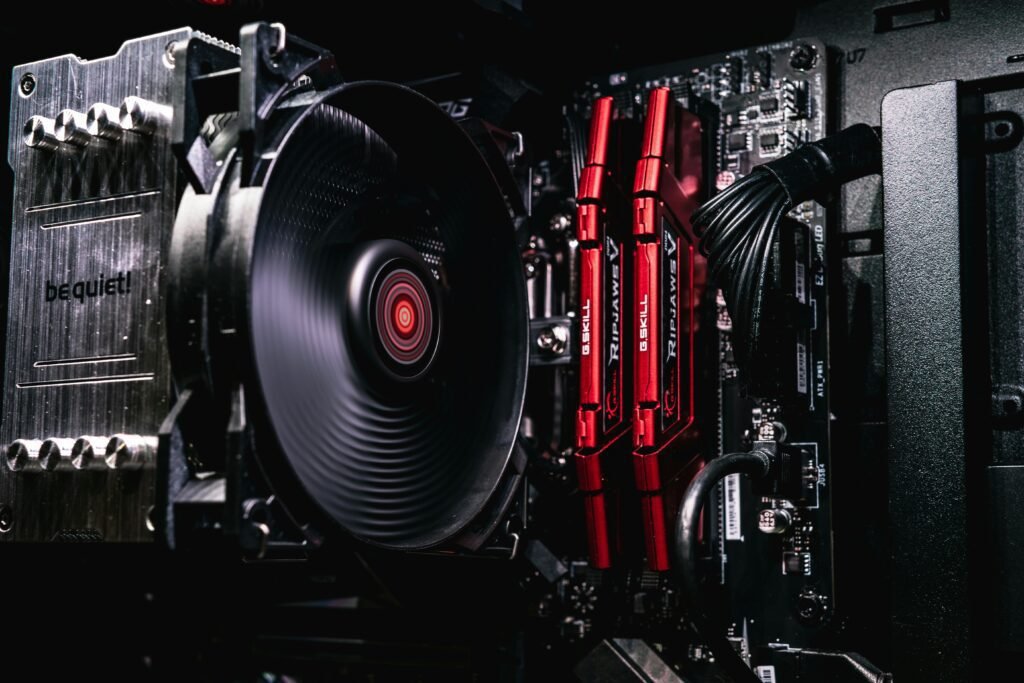
6. How to choose the right fan
Selecting the right industrial fan isn’t as simple as picking a model from a catalog. First, you must understand the specific problem at the plant, and only then select the fan. If this step is skipped, the fan might underperform, generate excessive noise, or consume more electricity than necessary.
1. What result do you need from the fan?
- Sometimes the goal is simply to keep workers comfortable. At other times, the aim is to extract welding smoke or paint fumes, operate a dust collector, or supply process air to an oven, dryer, or boiler. Each task requires a different type of fan; an HVLS fan that is ideal for comfort might be ineffective for dust collection.
2. Determining airflow
- The required airflow isn’t determined by guesswork but by the space and the process involved. For a warehouse, factors like area, height, and air change rates are considered. For an exhaust system, the capture point and duct size are crucial. Remember this: the advertised maximum CFM is not the actual figure. The true figure is obtained only after accounting for system resistance.
3. Pressure
- In an open hall, air circulates freely, so an axial fan may suffice. However, if ducts, bends, dampers, filters, or dust bags are introduced, the air needs to be pushed forcefully; in such cases, a centrifugal fan is a better choice. The rule of thumb is: focus on volume for open spaces and on pressure when there are obstructions.
4. Air condition
- If the air is clean, you can opt for an efficient backward-curved or airfoil fan. If the air contains dust, wood chips, powder, or sticky particles, a rugged design—such as a radial blade fan—is required. High temperatures can damage standard fans, while the presence of chemicals or moisture necessitates special coatings or materials. In short, **air quality** is just as important a specification as airflow.
5. Space and installation
- Where will the fan be installed? Will it be mounted on a wall or roof, suspended from the ceiling, fitted inside a duct, or kept portable? HVLS fans are best for large, open-ceiling spaces. Wall or roof ventilators are convenient for exhaust purposes. Inline or centrifugal blowers are suitable for concealed duct systems. Portable floor fans are useful when you need to cool only a single workstation.
Consider practical factors alongside these options.
- How long is the factory shift?
- Will the fan run for 8 hours or 24 hours?
- What level of noise is acceptable?
- Who will handle maintenance?
- Direct-drive fans are simple, whereas belt-drive fans offer flexibility in speed adjustment. Most importantly, focus on “running costs” rather than just the initial price. Industrial fans operate for years, so investing in an energy-efficient machine yields long-term benefits.
Quick matching table
Factory requirement
Better initial choice Fan
Comfort in large warehouses
HVLS or large axial fan
Exhausting air through walls/roof
Propeller / axial ventilator
Dust collection or handling dirty air
Radial centrifugal fan
HVAC ducts and filters
Backward-curved / airfoil centrifugal fan
Ovens, kilns, furnaces
High-temperature fan
Cooling a specific area only
Portable industrial floor fan
Final checklist
Clarify these three points before finalizing the fan:
– Required CFM (airflow volume)
– Required static pressure
– Power consumption at that operating pointOnce these three parameters align, selecting the right industrial fan becomes easy. Factors like material, noise levels, and maintenance requirements then serve to refine your final decision.

7. Energy, money, and smarter fans
The true cost of an industrial fan isn’t found at the shop; it’s hidden in your “monthly electricity bill”. A factory fan runs 8, 12, or even 24 hours a day. Over 5 to 10 years, electricity costs can far exceed the fan’s initial purchase price.
This section is crucial because the right fan doesn’t just provide airflow—it “saves money” too.
First, understand where the costs come from:
The fan’s purchase price is a one-time expense.
Electricity bills are a recurring monthly cost.
Incorrect sizing leads to excessive noise, heat, and premature breakdowns.
Belts, bearings, filters, and downtime also contribute to the total cost.
In short, a cheap fan today can prove expensive tomorrow if it operates inefficiently.
Common mistake: bigger motor = better fan
An oversized fan consumes excess power.
- Higher airflow often comes with increased noise and vibration.
- Controlling the system becomes difficult.
- An undersized fan fails to get the job done effectively.
- People then install additional fans, driving up the total bill even further.
- The right fan delivers the required airflow at the required pressure.
Practical tips for saving energy:
A large fan running at a slow speed is often more efficient than a small fan running at high speed.
- Lower RPM means less noise, greater comfort, and reduced power consumption.
- This is why HVLS fans are ideal for warehouses and facilities with high ceilings.
- A single, properly selected HVLS fan can replace multiple small, high-speed fans.
- In ducted systems, the fan should operate near its “Best Efficiency Point.”
- Buying a fan based solely on the maximum CFM listed in the catalog can lead to energy waste.
- The real question is: how much power is required to deliver that specific airflow at that specific pressure?
How to compare:
A Variable Frequency Drive (VFD) ensures the fan doesn’t always run at full speed.
Speed drops during periods of low heat, light shifts, or night mode.
Even a slight reduction in speed leads to significant power savings.
EC motors are more efficient than traditional motors.
They also offer easier speed control.
With sensors installed, the fan can automatically adjust based on temperature, pressure, occupancy, or air quality.
When truly needed, saving energy the rest of the time.
The cost-benefit rule:
Initial cost matters if the fan runs for limited hours.
Efficiency matters if it operates during long daily shifts.
Investing in a superior, controllable fan today quietly lowers your electricity bills for years to come.
A smart choice is one that not only moves air effectively but also manages energy consumption, noise levels, and maintenance requirements.

8. Installation, maintenance, and safety
Simply installing an industrial fan isn’t enough. Without proper installation, regular maintenance, and basic safety measures, the fan may break down prematurely or fail to perform effectively. These three factors determine both the fan’s lifespan and the factory’s safety.
Key installation points:
First, decide where the fan will be mounted: wall, roof, ceiling, duct, or floor.
Position the fan so that air can enter and exit freely.
Airflow is reduced if walls, stock, machinery, or curtains are placed too close to the intake.
If installing an exhaust fan, make-up air is also required; without a path for fresh air to enter, negative pressure builds up in the room.
Negative pressure causes doors to stick, impairs smoke control, and forces the fan to work harder.
Sturdy mounting is essential for HVLS or large ceiling fans; the ceiling structure must be capable of supporting the weight and withstanding vibrations.
In ducted fans, sharp bends, incorrectly sized ducts, and leaky joints increase pressure loss.
Don’t just switch the fan on after installation; check the airflow, noise levels, and vibration on-site.
Key maintenance points:
- Industrial fans operate daily, so minor checks can prevent major problems.
- Keep the blades and housing clean; accumulated dust can cause the fan to become unbalanced.
- Imbalance leads to vibration, premature bearing failure, and increased noise.
- Regularly inspect belts, bearings, and bolts.
- A loose belt reduces speed, while dry or damaged bearings cause heat and noise.
- Do not ignore any unusual sounds; the fan often provides a warning before a failure occurs.
- Filters are also part of the system; a dirty filter creates extra pressure.
- Extra pressure means the fan consumes more electricity to move the same amount of air.
- Changing filters improves not only air quality but also extends the fan’s lifespan.
Key safety points:
- Guards and screens around fans are essential, especially in areas where people walk or materials are transported.
- Safely shut down the machine before servicing; cleaning a running fan or adjusting its belt is dangerous.
- Do not install standard fans in areas containing flammable vapors, fine dust, or chemicals.
- Spark-resistant or specially rated fans are required in such environments.
- Ordinary fans are unsuitable for use near high-temperature zones, ovens, kilns, or furnaces.
- Install large ceiling fans only on strong, approved mounts.
- Safety is essential not only for preventing accidents but also for ensuring consistent performance.
9. Common mistakes
The biggest problem when buying an industrial fan isn’t a lack of options; it’s that people start with the “wrong questions”. Choosing a fan based solely on size, appearance, or initial price seems easy, but it often leads to issues like poor airflow, excessive noise, and high electricity bills later on.
Most common mistakes:
Buying based only on diameter or appearance:
A large fan isn’t always powerful. The real metrics that matter are CFM and static pressure.
Relying on the catalog's maximum CFM rating:
That figure often represents “free-air” performance; actual airflow drops significantly when ducts, filters, or dust are involved.
Using a light-commercial fan for industrial-duty tasks:
Handling dust, heat, and 24/7 operation requires heavy-duty construction; otherwise, the motor, blades, and bearings fail prematurely.
Ignoring the difference between axial and centrifugal fans:
Axial fans suit open spaces, whereas centrifugal fans are needed for ducts, filters, and contaminated air.
Overlooking the 'dirty side' of dust collection:
Handling dirty, abrasive air requires a radial or rugged fan; a standard clean-air fan will wear out quickly in such conditions.
Improper placement:
Placing exhaust and intake vents too close together causes “air short-circuiting”—the fan runs, but the room’s air isn’t actually replaced.
Failing to consider make-up air:
Exhausting air without providing a path for fresh air creates negative pressure, leading to hard-to-open doors, increased load, and poor performance.
Not planning for noise:
Small fans running at high speeds are often noisier. This becomes a major issue in large halls, office areas, or during night shifts.
Cheap today, expensive tomorrow
A low-priced fan might seem like a bargain initially, but higher electricity consumption, maintenance costs, and the need for early replacement drive up the total cost of ownership.
Not checking performance after installation:
The job isn’t finished just because the fan is installed. You should check the airflow, vibration, and sound levels on-site.
A simple way to avoid these mistakes:
Decide on the task first, the model.
Ask for all three specifications: CFM, pressure, and power.
Clearly state whether the air is clean or dirty.
Select the fan based on the location, noise constraints, and daily operating hours.
Consider the lifetime cost, not just the sticker price.
In short:
A “wrong” fan isn’t necessarily a cheap one; a wrong fan does not perform at your system’s operating point.
10. FAQs
What is the difference between an industrial fan and a blower?
- In everyday language, both are air-moving machines. Generally, a fan is used for high air volume and relatively low pressure. A blower is used when air needs to be pushed at higher pressure through ducts, filters, or specific processes. Many centrifugal fans are also referred to as blowers.
Can an HVLS fan cool an entire warehouse?
- Often yes, provided the size, ceiling height, and placement are correct. HVLS fans provide even airflow across large spaces. However, very long buildings, partitioned areas, or intense heat sources might require more than one fan. Unlike air conditioning, it doesn’t freeze the air; instead, it improves comfort by circulating air.
Why is my exhaust fan moving less air than the advertised CFM?
- The maximum CFM listed in the catalog is often based on “free-air” conditions. On-site factors like ducts, bends, filters, dirty blades, and improper placement create resistance. As pressure increases, airflow drops. Therefore, select a fan based on the actual pressure present in your system.
How loud is the noise?
- There isn’t a single figure that applies to every factory. Some noise might be acceptable in a workshop, but not in office areas or during night shifts. A small fan running at high speed is often louder, whereas a large fan running at a slower speed is frequently quieter and more efficient. Always check the dB rating before installation.
How often should the bearings be checked?
- It depends on the operating conditions. Fans running 24/7, or those in dusty or high-temperature environments, require more frequent checks.
- A simple rule: inspect immediately if you notice vibration, heat, or unusual sounds. Regular visual inspections and scheduled lubrication extend the fan’s lifespan. The manufacturer’s recommended maintenance interval is the best starting point.
When is a spark-resistant or explosion-proof fan required?
- When the air contains flammable vapors, fine combustible dust, or gases that could become dangerous if exposed to a spark. Paint booths, certain chemical processing areas, and specific dust handling systems may fall into this category. Do not use a standard fan in such environments. A properly rated fan and the right electrical setup are both essential.
Should I choose an axial or a centrifugal fan?
- For open spaces, general ventilation, wall/roof exhaust, or warehouse comfort, consider axial or HVLS fans first. Centrifugal fans are better if the system involves ducts, filters, dust collection, fume extraction, or high resistance.
Should I buy a cheap fan?
- If the fan is to run for limited hours, the initial cost matters. However, for daily long-shift operations, efficiency, durability, and lifetime costs are more important. A cheap fan can end up being more expensive due to higher electricity consumption, frequent repairs, and the need for early replacement.
Are three questions enough when choosing a fan?
Yes, start here:
- What CFM is required?
- At what static pressure is it needed?
- How much power will be consumed at that operating point?
Once these three factors are clear, making the rest of the choice becomes easy.