Table of Contents

Why Kitchen Exhaust Matters
During cooking, steam, smoke, oil particles, and odors mix into the kitchen air. The problem arises when this air has no way to escape.
First, odors linger. Then, cabinets become sticky. After a while, a thin, greasy film appears on tiles and walls. This grime doesn’t come from an external source—it is simply the cooking air that remains trapped inside the room.
This becomes noticeable much faster in small kitchens, where there is less space for the air to disperse. In open-plan kitchens, smoke can drift all the way into the living room.
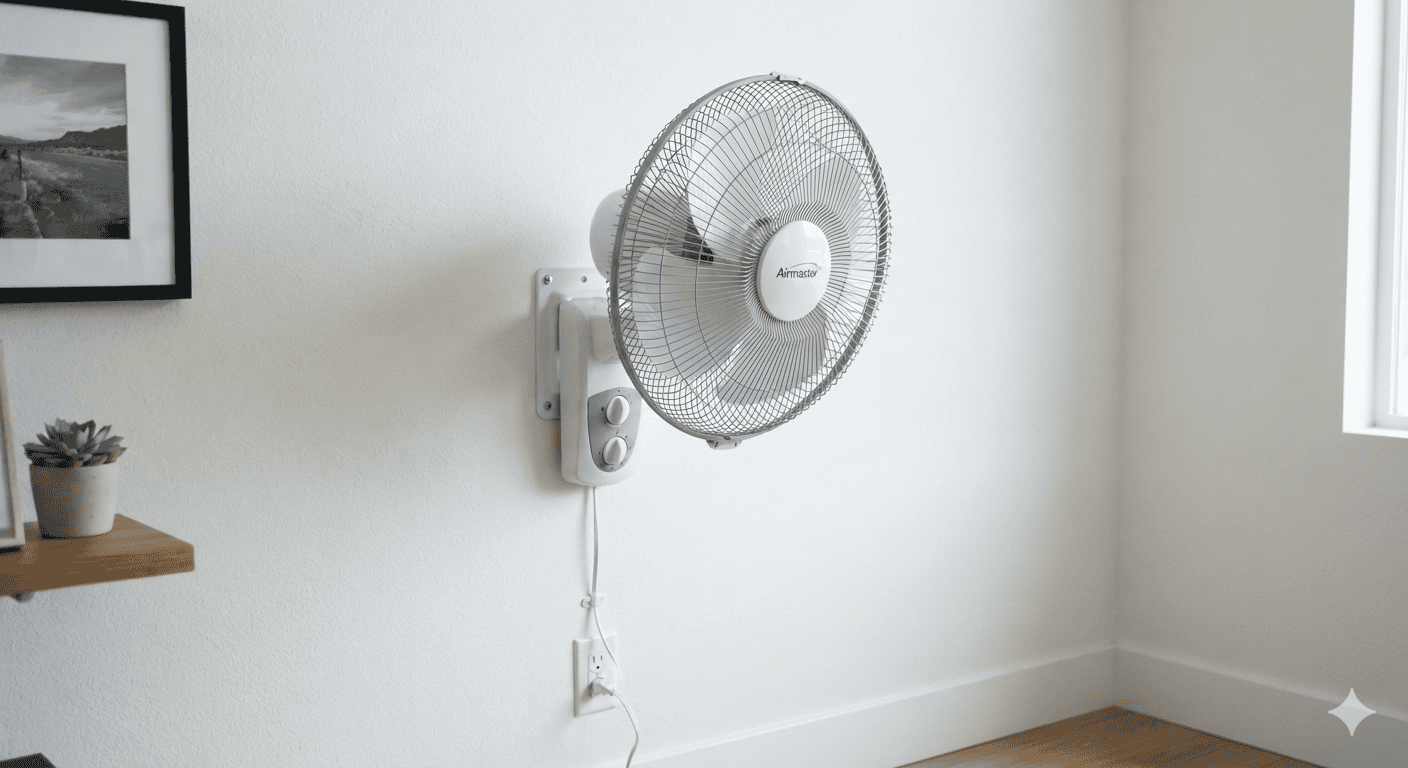
A **range hood** captures smoke rising directly from the stove, while a **wall or window exhaust fan** removes hot, smelly air from the rest of the room. Although their functions differ slightly, they share the same goal: quickly restoring the kitchen environment to normal.
A ducted system vents air outside the home, making it more powerful. In the absence of ductwork, a ductless hood filters the air and recirculates it; while better than nothing, it does not fully eliminate heat and moisture.
If cooking odors linger, cabinets become sticky, or the room feels hot and clammy, an exhaust system is essential. Choosing the right model comes later; the first step is recognizing that kitchen air requires a planned exit route.
If you want to read about exhaust fans in detail, then you can visit our [Best Exhaust Fans Buying Guide]; if you want to know different types of exhaust fans, you can check our [Types of Exhaust Fans]; or if you want to know about each fan, then you can visit our [The Ultimate Guide to Fans].
The two big decisions before choosing any model
There are countless brands and CFM ratings on the market. Before looking at those, clarify just two questions. Answering them significantly reduces the risk of choosing the wrong model.
Decision 1: Will the air be vented outside, or filtered and recirculated back into the room?
This is the ducted vs. ductless question.
- A ducted system expels dirty cooking air outside the home via ducts. Smoke, steam, heat, grease particles, and most odors are removed in the process. If your kitchen can connect to an exterior wall, a shaft, or a roof vent, this is the better option—especially for heavy-duty tasks like tempering, frying, and gas stove cooking.
- A ductless (or recirculating) system passes the air through grease and charcoal filters before releasing it back into the kitchen. Installation is easy since external ductwork isn’t required; this makes it a practical choice for apartments, rentals, and interior kitchens. The limitation is that while odors are somewhat reduced, most heat and moisture remain inside. Charcoal filters also need replacement every 3–6 months.
- A convertible hood supports both modes. If you don’t have ductwork now, use the recirculating mode; if you can install ductwork later, switch to ducted mode.
A quick rule of thumb for deciding:
- Venting outside is possible + regular cooking/frying → Ducted
- Venting isn’t possible + light-to-medium cooking → Ductless
- Possibility of installing ductwork in the future → Convertible
This decision is more critical than the specific model itself. Even a 900 CFM ductless hood won’t remove heat as effectively as a properly installed ducted hood.

Decision 2: Where is the stove located, and what is above it?
The second decision concerns the layout. The same fan doesn’t work equally well in every kitchen.
Stove against the wall + cabinets above
- The most common setup. An under-cabinet range hood fits here.
- It saves space, maintains a simple look, and is relatively easy to retrofit.
Stove against the wall, but no cabinets above
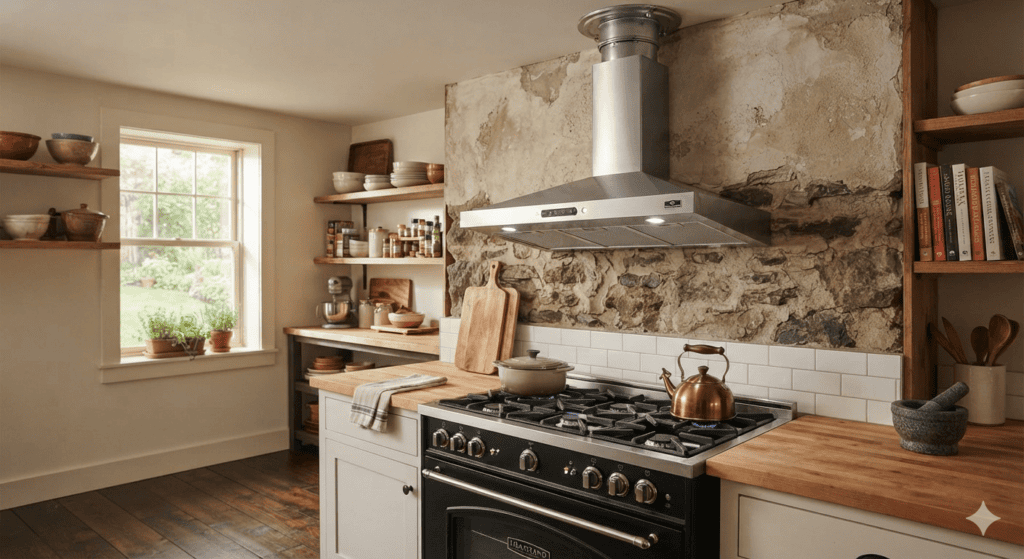
- A wall-mount or chimney hood is better here. It is visible and often provides a better capture area.
Stove on an island
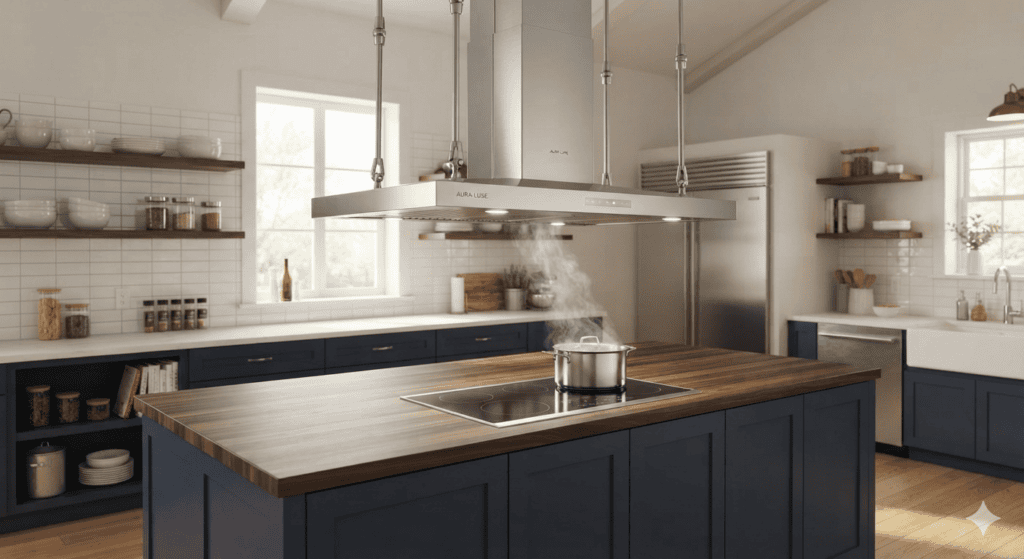
- An island or ceiling hood is needed here. In an open space, air drifts in from the sides, so the hood should be wider and more powerful. Consider a downdraft system only if a hanging hood isn’t possible—it’s not the first choice for heavy frying.
Rental home, drilling not allowed, or difficult to install ductwork
- A portable/countertop hood or window exhaust fan is practical here. While not a full replacement for a permanent hood, it offers a no-installation option.
A hood is present, yet the kitchen remains sticky or smelly.
- This means the hood alone isn’t enough. An additional wall or window exhaust fan helps remove residual heat and odors from the room.
A quick rule of thumb:
- Cabinets above → under-cabinet hood
- Empty wall → chimney/wall-mount hood
- Island cooktop → island hood
- Cannot install ductwork → portable hood or window fan
- Room feels heavy/stifling even with the hood → consider an extra wall/window fan.
Once these two decisions are clear, comparing models becomes easy. That is when comparing CFM, noise levels, filters, and price becomes useful—not before.

Best models in Under-cabinet and range hoods
Hauslane Chef Series PS18 (UC-PS18)
About 860 CFM; 30″/36″; 6 speeds
Best “serious home cooking” under-cabinet example. Baffle filters, several finishes, multi-way venting.
Hauslane UC-PS38
About 950 CFM
Higher-powered Hauslane sibling. Good for “step up if you fry often.”
COSMO COS-5MU30
About 200 CFM
Budget slim hood. Perfect “light cooking, tight budget” contrast.
COSMO COS-QS75
About 500 CFM
Dual-motor / curved Cosmo. Mid-range style + more power than COS-5MU30.
AMZCHEF 30
750–1,050 CFM
Feature-rich value hood: touch/gesture / remote on many versions.
IKTCH IKC01-30
About 900 CFM
High-CFM under-cabinet on a mid budget. Compare noise vs. Hauslane.
VIKIO HOME RC11
About 900 CFM
Same job as IKTCH: “gas range / frequent searing” under-cabinet option.
Best models in Wall-mount / chimney and slant hoods
VIKIO HOME RC11
About 450 CFM on common listings; higher-CFM Tieasy versions exist.
Affordable chimney look. Convertible ducted/ductless. Great “first chimney hood” example.
COSMO COS-63175S
About 380 CFM
Stylish 30″ chimney with permanent baffle filters. Design-forward midrange.
ZLINE KB-30 (KB Series)
About 400 CFM; many widths
Trusted wall-mount line. Good for sizes from 24 to 48 inches.
IKTCH IKP02
About 900 CFM
High-power wall chimney. Pair against Tieasy to show CFM vs. price.
Hauslane WM-538
Mid/high wall-mount class
Use for filtration / chimney-series continuity with Hauslane under-cabinet.
FOTILE JQG7505
About 530–850 CFM, depending on the listing
Side-draft / slant hood. Different capture style. Gesture control story.
FOTILE EMG9030 Perimeter
About 1,100 CFM
Premium heavy-duty cooking chimney. “When standard hoods are not enough.”
Best models in Island/ceiling/specialty built-in
ZLINE GL2i-36
Island series
“Statement island hood” example with a known brand line.
ZLINE GL9i
Glass canopy island
400–760 CFM class. Statement hood.
COSMO COS-63ISS75
About 380 CFM
Budget-friendly island starter unit. Suitable for light cooking; might fall short for heavy frying.
COSMO COS-668ICS750
Glass + steel look
380 CFM. For design-first open kitchens.
Hauslane Chef IS-200
About 900 CFM
or a regular tempering
Hauslane Chef IS-200
About 900 CFM
or a regular tempering
Victory Sunset
Flush ceiling, 600 CFM
Everyday cooking, almost hidden look
Victory Horizon
Flush ceiling, 600 CFM
Everyday cooking, almost hidden look
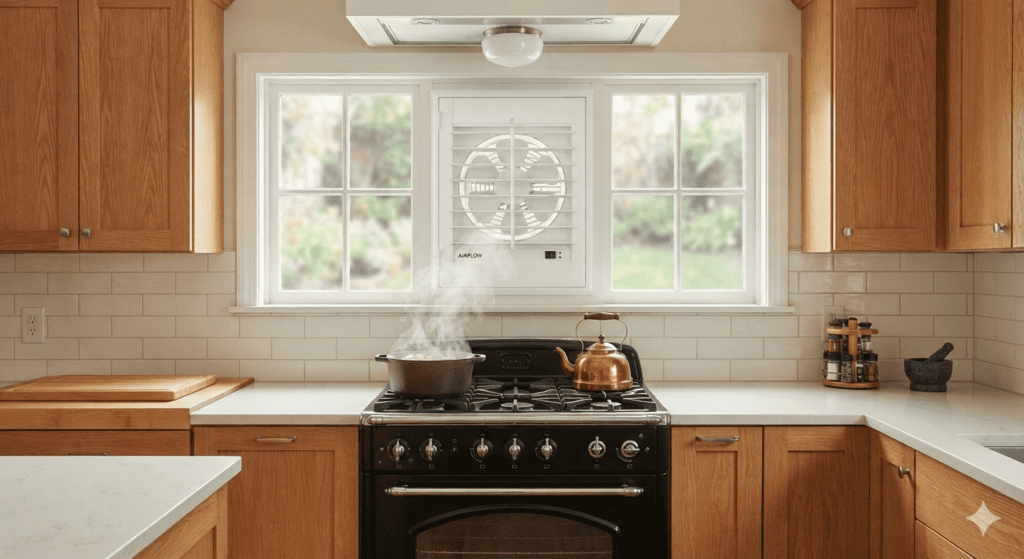
Best models in Wall, window, and ceiling exhaust fans
HG Power 8-inch metal exhaust fan
About 567 CFM
The most-cited budget kitchen wall fan. Simple, metal, high airflow per dollar.
HG Power 10-inch
About 988 CFM
Large-kitchen / heavy-smoke wall fan. Contrast noise and hole size with the 10-inch.
HG Power 6-inch
About 308 CFM
Small kitchen or extra helper fan.
iLIVING 10-inch shutter fan
About 600–820 CFM, depending on the listing
Automatic shutters + a more “finished” wall-fan design.
iLIVING 12-inch shutter fan
About 600–820 CFM, depending on the listing
Automatic shutters + a more “finished” wall-fan design.
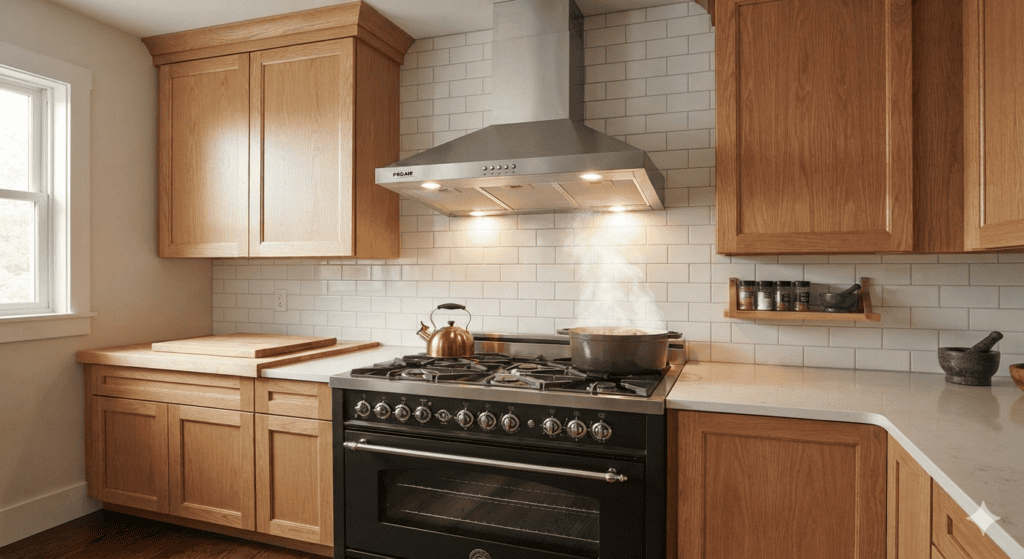
Best models in Portable / countertop hoods
TUCO Portable Range Hood
95 CFM class; 3 speeds; multi-layer filter; oil cup
Often named “best overall portable.” Honest about the small capture zone.
BREETEE Portable
95 CFM; 5-layer filter; 50–65 dB
Filtration-first portable.
AMZCHEF portable (ZM7001)
150 CFM on some reviews; 4 speeds; tilt/height
Best “adjustable height” portable.
Airthereal RH180
3 speeds; 3-layer filter; some rechargeable versions
Value / cordless-option story.
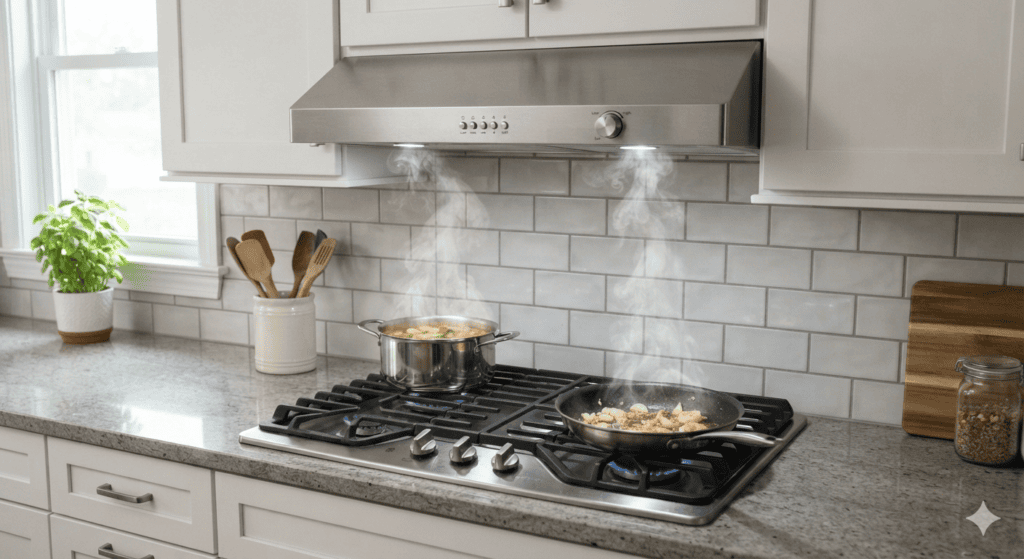
Installation
Even the right model can underperform if installed incorrectly. A kitchen exhaust’s true performance depends not only on the unit’s CFM rating but also on placement, ducting, and mounting height.
Check these 5 things before installation:
- Clearance above the stove: The hood should be positioned roughly 28–36 inches above the cooktop. If installed too high, smoke will escape from the sides. If too low, cooking becomes awkward, and the unit may be exposed to excessive heat.
- Hood width: The hood should not be narrower than the stove. A 30-inch hood is the minimum requirement for a 30-inch cooktop. For island installations, extra width is preferable since air disperses in all directions (360°).
- Ducted vs. ductless: For ducted models, determine the exhaust route first—whether through a wall, a shaft, or the roof. For ductless models, ensure you have charcoal filters and a recirculation kit ready.
- Ducting path: Keep the duct straight and short. The ideal setup involves a short run, minimal bends, and smooth piping. Long flexible ducts, excessive elbows, and pinched pipes restrict actual airflow.
- Ceiling height and wiring: Island or chimney hoods may require an extension kit. The fan needs a dedicated power switch or outlet, and heavy hoods require adequate ceiling support.
Basic installation overview by type
Under-cabinet hood
- Mounted beneath a cabinet. The duct can exit upward or through the rear wall. This is the most common setup for retrofitting.
Wall-mount / chimney hood
- Mounted directly onto the wall. A chimney cover conceals the ductwork. If the ceiling is high, you may need an extra chimney extension piece.
Island hood
- Suspended from the ceiling, with the duct usually routed upward toward the roof or attic. This is not a DIY-friendly project; plan for ceiling joists, the duct path, and the hood’s weight in advance.
Flush/ceiling hood
- It sits almost flush within the ceiling, offering a clean look; however, factors like the ceiling cavity, joist spacing, and duct size must be determined beforehand.
Wall/window exhaust fan
- This is a room exhaust fan, not a stove canopy. It requires an opening in an exterior wall or window. It should feature a shutter or damper to prevent outside air, dust, or insects from entering when the fan is turned off.
Portable hood
- Requires virtually no installation. You need an outlet, a filter, and the correct angle near the cooking vessel. Do not consider it a replacement for a permanent hood.
Keep these points in mind during installation.
- Consult the manufacturer’s height chart first; do not rely on guesswork.
- Tape or seal duct joints to prevent suction leaks.
- Consider “makeup air” if the fan is very powerful and the home is tightly sealed; a strong exhaust fan can sometimes create enough suction to pull on doors.
- Test the filters, lights, and speed controls after installation—and don’t forget to remove the packaging materials.
- Run the fan for 2–3 minutes before your first cooking session to ensure air is moving, there is no rattling noise, and the shutter opens correctly.
Professional installation is preferable for island hoods, ceiling hoods, new wall cutouts, or long duct runs. While replacing a small under-cabinet unit can sometimes be a DIY job, you should call an electrician or installer if the wiring or venting requirements are unclear. If the wiring or venting requirements are unclear.
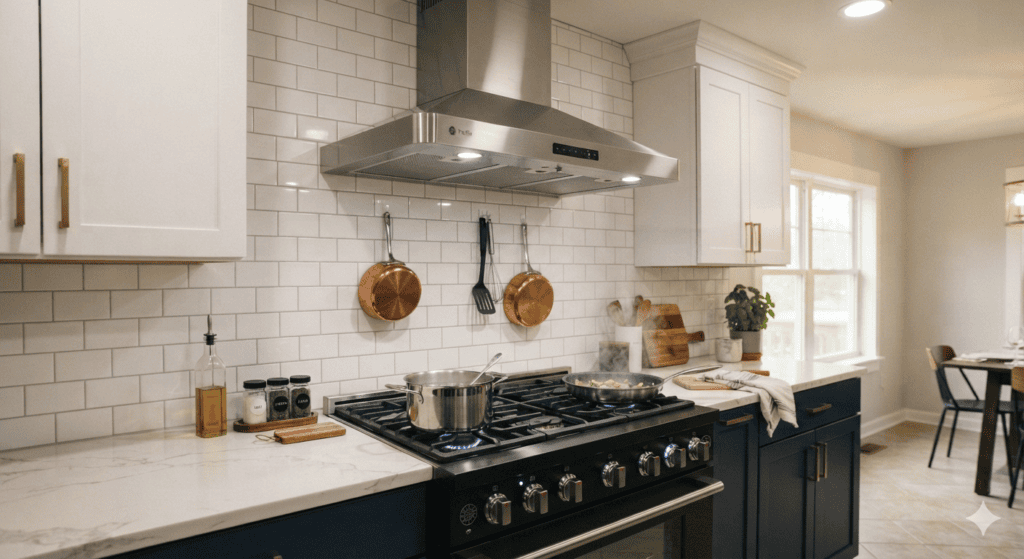
Common mistakes
1. Buying based solely on CFM ratings
Just because the box says “900 CFM” doesn’t mean your kitchen will instantly feel fresh. Incorrect mounting height, a dirty filter, or a long, constricted duct can negate that rating. Prioritize layout first, then airflow.
2. Installing a hood smaller than the cooktop
Using a 24-inch hood over a 30-inch stove is a common mistake. Smoke from the corner burners escapes outside the hood’s coverage area. Ensure the hood width is at least equal to the stove’s width.
3. Mounting the hood too high
People often mount the hood high to avoid bumping their heads. Consequently, the fan tries to pull smoke away only after it has already dispersed. Effective capture happens only when the hood is close to the rising plume of smoke.
4. Expecting ducted-style performance from a ductless hood
Ductless systems reduce odors somewhat, but heat and moisture largely remain in the kitchen. They are fine for apartments, but understand their limitations if you do a lot of frying.
5. Installing cheap, flexible ducting
Long, sagging, or tightly bent flexible ducts choke airflow. Use short, smooth ducting whenever possible. Extra bends mean reduced efficiency.
6. Never clean the filters
If the grease filter gets clogged, the fan works harder but exhausts less air. Regularly wash mesh or baffle filters. Replace charcoal filters in ductless models every 3–6 months.
7. Mistaking a bathroom fan for a kitchen fan
Quiet bathroom fans are designed for steam, not for the smoke generated by frying or tempering spices. Kitchens require a proper capture area and grease filters.
8. Applying wall-mounted hood logic to an island kitchen
Air currents can easily blow smoke away from an island setup. Insufficient width, low CFM, or a flush-mounted hood without robust ducting allows odors to drift into the living room.
9. Buying a fan so loud that no one ever turns it on
Even the most powerful model is useless if you don’t actually use it. For daily cooking, the best fan is one that performs well at low or medium speeds.
10. Skipping the exhaust fan in favor of just opening a window
While a window helps, it offers no control over airflow; cooking odors can easily drift into other rooms. An exhaust fan is designed to capture and direct air right at the source.
11. Neglecting to check the exterior cap or shutter
If the outside flap is stuck, blocked by a bird’s nest, or sealed shut by paint, the indoor fan becomes ineffective. If suction seems weak, check the external vent first.
12. Installing an overpowered fan without proper planning
A very powerful exhaust fan can create negative pressure in a tightly sealed home. This can cause doors to stick and, in some cases, lead to air being drawn back in through other vents. If you are installing a high-CFM island or wall-mounted fan, you must consider “makeup air” requirements. You must consider “makeup air” requirements.